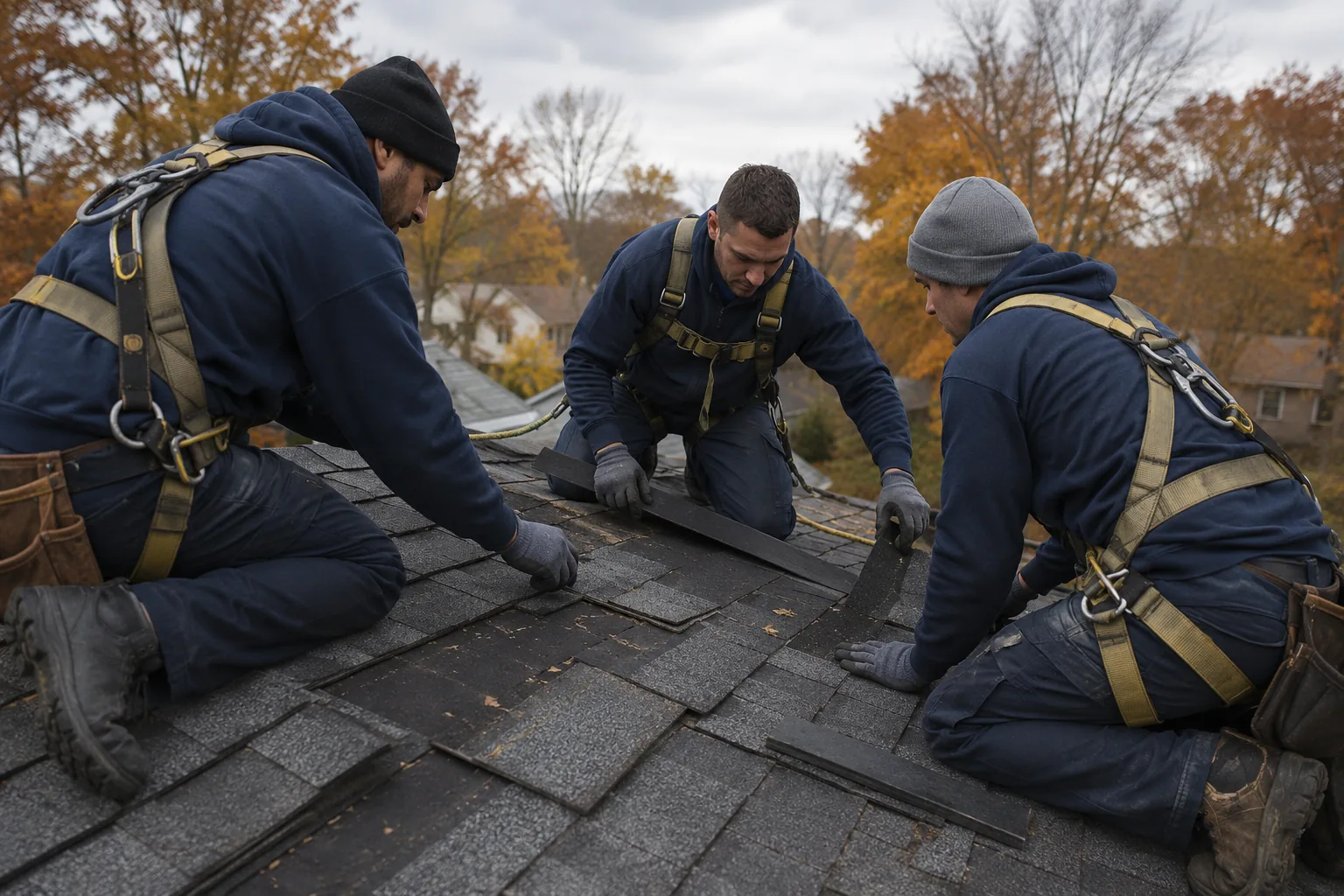
Rain, temperature swings, freeze-thaw cycles, and strong winds make regular exterior observation valuable across the Ohio River Valley. A seasonal checklist will not prevent every failure, but it can help teams find visible changes and arrange repair before water or air intrusion spreads.
Inspect from safe locations
Review roofs from the ground, siding, window and door seals, gutters, downspouts, masonry joints, exterior lights, and pavement. Look for missing or loose materials, cracked caulk, staining, open joints, damaged screens, and repeated water marks. Do not climb onto roofs or ladders in unsafe weather.
Connect visible conditions to interior reports
Ask whether occupants have noticed drafts, new stains, recurring condensation, or water after wind-driven rain. Compare those reports with exterior observations and record the location. A stain can have more than one cause, so avoid making repairs based on assumptions alone.
Plan work in the right order
- Address active water entry and unsafe conditions first.
- Have qualified contractors assess roof, electrical, or structural concerns.
- Coordinate sealing and painting with temperature and product requirements.
- Check drainage after repair and confirm runoff moves away from the building where appropriate.
Keep a photo log
Use the same viewpoints in spring and fall to compare conditions over time. Record completed work and any deferred item with a reason and review date. Consistent observations turn seasonal upkeep into a practical asset-management routine rather than a last-minute response to bad weather.