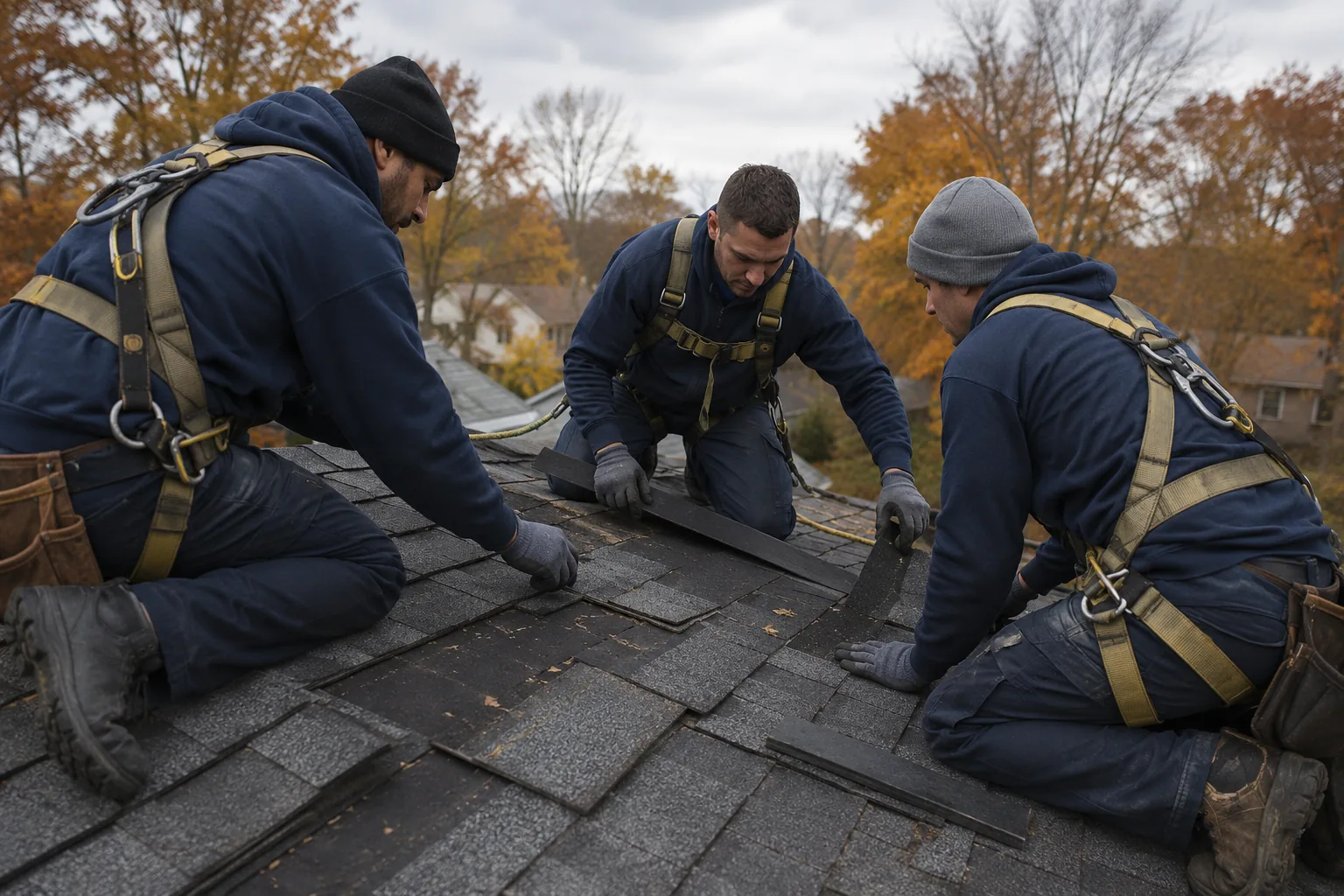
After strong wind or hail, it is tempting to climb up and look for damage. That can create a second emergency. A safer first inspection starts from the ground and inside the building, after weather conditions have settled. Do not walk on a wet, damaged, icy, or unfamiliar roof.
Look from the ground
From a safe position, check for displaced shingles, bent flashing, fallen branches, damaged gutters, debris, or a visible sag. Use binoculars or photos from the ground rather than a ladder. Keep away from downed wires and damaged trees, and do not approach a roof edge to improve a photo.
Check the interior for signs of water
Look at ceilings, upper walls, attic access areas, and around roof penetrations for fresh stains, damp insulation, dripping, or a musty odor. Do not enter an attic if the floor or framing may be wet, unstable, or near exposed wiring. If water is near electrical equipment, avoid the area and contact a qualified professional.
Document and protect the building
- Photograph the condition from safe locations and note the time and weather.
- Move contents away from an active drip if it is safe to do so.
- Use a container to catch water; do not make temporary roof repairs during a storm.
- Contact your insurer and a qualified roofing contractor for significant or uncertain damage.
Arrange a professional assessment
A contractor can inspect roof coverings, flashing, drainage, and concealed areas using appropriate fall-protection practices. Ask for a written scope that separates emergency stabilization from permanent repair. Prompt, documented follow-up can limit interior damage and make future maintenance easier to plan.